
Compassionate Inquiry in My Therapeutic Practice / Q&A article
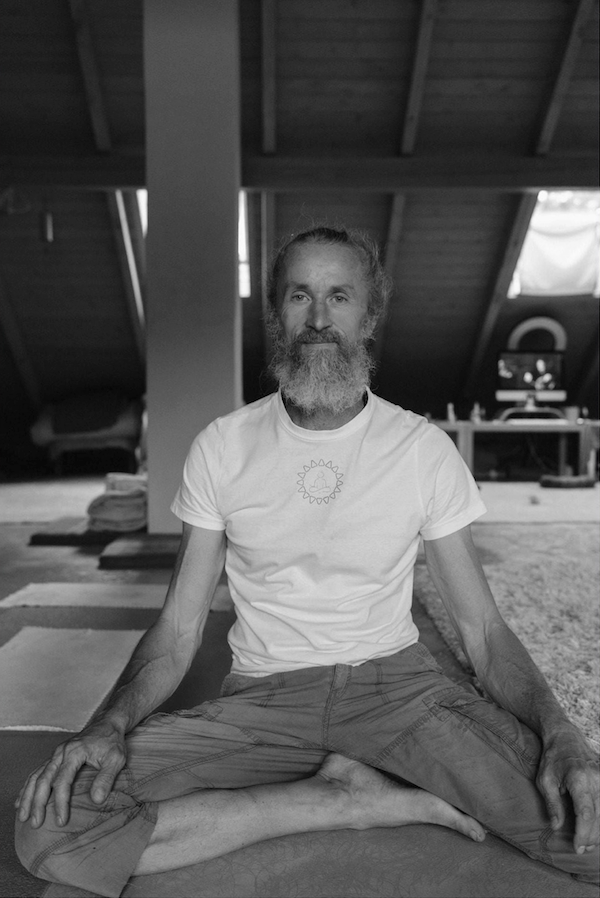
These reflections are based on my personal and professional experience with Compassionate Inquiry, shaped by my work with clients and my ongoing practice.
Can you tell more about your professional background and current therapeutic practice?
I am a therapist and facilitator working at the intersection of body, mind and nervous system. My background combines Compassionate Inquiry (CI), Kundalini Yoga, somatic work and practical neurobiological understanding. I also have years of experience in bodywork and deep tissue therapy, which strongly influences how I perceive emotional patterns as being held not only in the mind but also in the body.
My current practice includes one-to-one sessions and group work, where I integrate inquiry, breath, movement and awareness.
How did you first become aware of Compassionate Inquiry Therapy?
I first came across Compassionate Inquiry through the work of Dr. Gabor Maté. His way of connecting trauma, behavior and the body resonated with my own experience working with people physically and emotionally.
What motivated you to train in or incorporate Compassionate Inquiry into your work?
What drew me to CI was its depth and honesty. It doesn’t try to fix symptoms on the surface but invites a person to gently explore what is underneath. It aligned naturally with my experience that change happens when we include the body, emotions and unconscious patterns and not just cognitive understanding.
How would you describe your level of experience with this approach?
I have completed formal training in Compassionate Inquiry and continue to deepen my practice through mentoring, peer work and client sessions.
How do you personally understand or define Compassionate Inquiry in your practice?
For me, Compassionate Inquiry is a way of being present with another human without judgment, while gently exploring the layers beneath their current experience. It is about respecting a space where truth can emerge and be rediscovered.
What do you see as the key principles of this approach?
The key principles I experience are presence, curiosity, non-judgment and compassion. Also a deep respect for the body as a source of truth and an understanding that behaviors and beliefs often arise as adaptations to past experiences.
In what ways, if any, has your understanding of Compassionate Inquiry evolved over time?
Initially I saw it more as a therapeutic method. Over time, it has become a way of relating to clients, to myself and to life. I am now seeing more clearly how important pacing, safety and nervous system regulation are within the process.
How do you integrate Compassionate Inquiry into your one-to-one therapy sessions?
I integrate CI through moment-to-moment awareness, listening not only to words but also to the body, tone and emotional shifts. I often invite clients to slow down, notice sensations and stay with their experience, while gently guiding inquiry into beliefs and patterns.
Can you describe what a typical session using this approach might look like?
A session often begins with grounding and arriving into the body. From there, we explore what is present both emotionally and physically. I may ask reflective questions, invite awareness to bodily sensations or gently challenge beliefs. The process is fluid and follows the client’s experience rather than a fixed structure.
How do you decide when to use Compassionate Inquiry with a client?
I see CI less as something I “switch on” and more as a foundation of how I work. However, I adjust the depth depending on the client’s readiness, nervous system state and capacity to stay present.
How does it fit alongside any other therapeutic approaches you use?
It integrates naturally with somatic practices, breathwork and movement. CI brings awareness and insight, while the body-based practices support regulation and integration.
What changes, if any, have you observed in clients when using Compassionate Inquiry?
Clients often begin to see their patterns with more clarity and less judgment. There is usually a shift from self-blame to understanding and from disconnection to a deeper sense of presence and self-awareness.
How do clients typically respond to this approach?
In my experience, clients can find this deeply validating and can begin to feel safer exploring parts of themselves they may previously have avoided. Some initially find it challenging, especially when it brings them closer to feelings they have avoided, but over time it often leads to meaningful insight and relief.
Are there particular types of clients or issues where you find it especially effective?
It is particularly effective with clients dealing with trauma, emotional patterns, self-criticism and relational difficulties. It works well where there is openness to self-exploration.
Are there situations where you feel it is less effective or appropriate?
When a client is highly dysregulated, deeper inquiry may not be what is needed in that moment. I may need to slow down and focus first on safety, regulation, the body and the therapeutic relationship.
What has been your personal experience of using Compassionate Inquiry as a therapist?
It has been both humbling and transformative. It continuously invites me to stay present, honest and connected not only with clients but with myself and slowing down a lot. Instead of fixing someone just see them for their possibility of growth.
How does using this approach impact you emotionally during or after sessions?
It can be deeply engaging emotionally, but when I stay grounded and connected to my own body, it feels nourishing rather than draining.
Have you noticed any changes in your therapeutic style or perspective since using it?
Yes, I have become less directive and more trusting of the process. I rely more on presence than technique.
What skills or qualities do you think are most important for delivering this approach effectively?
Presence, patience, emotional atunement, curiosity and the ability to regulate one’s own nervous system. In Kundalini Yoga, we speak of the positive, negative and neutral mind. In my practice, the neutral mind is especially important, as it helps me stay present, clear and non-reactive.
What challenges have you encountered when implementing Compassionate Inquiry?
One challenge is pacing and knowing how deep to go and when. Another is staying out of the role of “fixing” and allowing the process to unfold.
How do you manage the emotional demands associated with this type of work?
Through my own practices such as pranayam, kundalini yoga, meditation, movement, work in the garden, sports, dancing, supervision and self-reflection. Staying connected to my body is essential.
Have you faced any difficulties integrating it with other therapeutic models?
Not significantly, as it complements many approaches. The main challenge is maintaining clarity and not overcomplicating the process.
What barriers, if any, exist in terms of training, supervision or professional support?
Access to ongoing supervision and embodied practice is essential. Without it, it can be easy to stay at a conceptual level.
Can you describe your training experience in Compassionate Inquiry?
The training was deep and experiential, combining theory with personal process. It emphasized not only learning the method but embodying it.
How well did the training prepare you for real-world practice?
It provided a strong foundation, but real learning continues through practice, supervision and working with clients. I feel that without my regular daily practice of Kundalini Yoga and the broader yogic orientation of my life, it would be much harder for me to hold this kind of work in a grounded and sustainable way.
What additional support or development do you think therapists need when using this approach?
Ongoing mentorship, peer practice and personal therapy are very important to deepen embodiment and skill. Regular yoga or another embodied somatic practice can be a very valuable support.
How does Compassionate Inquiry influence your relationship with clients?
It creates a more authentic and human connection. The relationship becomes a space of exploration rather than correction.
In what ways does it affect trust, openness or connection in therapy?
My own grounded presence and regulated nervous system can support a greater sense of safety, trust and openness in the therapeutic space.
How do you manage boundaries while maintaining a compassionate and relational stance?
By staying clear in my role, grounded in presence and aware of both the client’s and my own limits.
Looking back, how has using Compassionate Inquiry shaped your identity as a therapist?
It has shifted me from “doing therapy” to “being with the client.” It became less about techniques and more about presence.
What do you see as the future of this approach in psychotherapy?
I see it becoming increasingly relevant as more people recognize the importance of trauma-informed, body-aware and relational approaches.
What advice would you give to therapists considering using Compassionate Inquiry?
Start with your own process. Develop your capacity to be present with yourself first. The quality of your presence is more important than any question you ask.
“The quality of my presence shapes the space.