
Safety begins in the body.
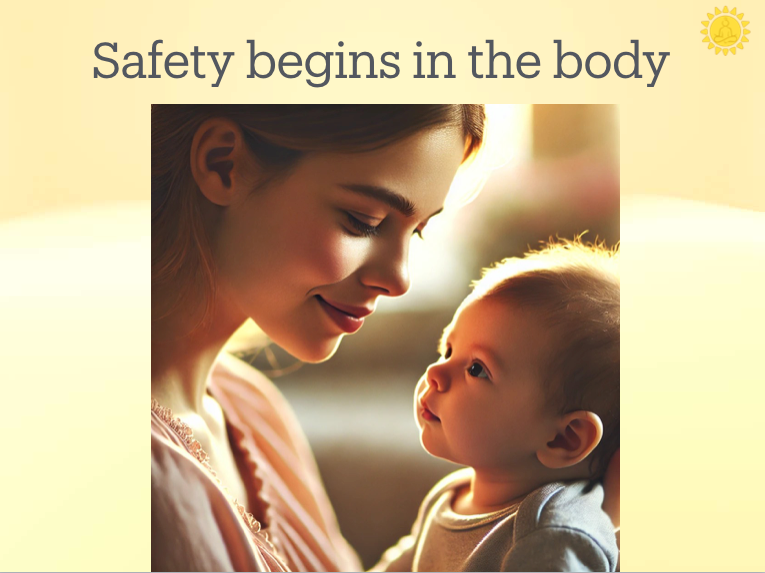
We are spiritual beings having a human experience.
What we experience as reality is not the world itself, but the way our nervous system processes it. Before the mind created an image of the world, the world shaped the mind through the body, relationships, and lived experience. Modern neuroscience shows that the brain is constantly predicting reality based on the past, which is why we perceive the world through a filter of safety or threat. What we consider “reality” is, in fact, a living process of interpretation.
What Lies Beyond Belief
What if the future of thriving is not about choosing between the ancient and the modern…but about learning how to feel, sense, and live both—directly in your body?
We live in a time where information is everywhere.
We can understand almost anything.
And yet…understanding does not always change how we feel.
It does not always bring ease, safety, or connection.
The mind can believe many things.
But the body moves at a different pace.
This space is an invitation to go beyond belief.
Not by rejecting thinking but by including the body, the breath, and direct experience.
Because what we truly know is not only what we can explain.
It is what we can feel, stay with, and live. Ancient practices like breath, movement, and meditation
meet modern understanding of the nervous system, trauma, and neurobiology.
Not as two separate worlds but as one lived experience.
You don’t need to choose between them.
You can experience both. Before we go further, take a moment.
Notice your breath.
Notice your body.
Notice what is here right now.
No need to change anything.
Just notice. This is where we begin.
Not from belief.
But from experience. Life doesn’t need to be understood first.
It can be met.
Why the Body Needs More Than Understanding
We live in a time where understanding is easily available. We can read, analyze, and explain almost anything about ourselves. And yet, many people experience a quiet gap between what they know and how they feel.
The mind can understand that something is safe. The body may still respond as if it is not. This is not a failure. It is the nature of the nervous system.
From a neurobiological perspective, the brain does not operate as a single system. The prefrontal cortex is responsible for reasoning, reflection, and conscious understanding. At the same time, deeper systems, particularly the limbic system and brainstem, are constantly evaluating safety and threat. These systems work much faster than conscious thought. Research shows that the brain is continuously making predictions based on past experiences, which means that the body often reacts before the mind has time to interpret what is happening. This is why we can know something is safe and still feel tension, contraction, or fear.
In early childhood, the nervous system is still developing. A child does not yet have the capacity to regulate intense emotional or physiological states on their own. It is also difficult for the child to hold contradictory experiences at the same time, such as feeling both love and fear in a stable way. When something feels overwhelming, confusing, or too intense, the child relies on the presence of a regulated adult. Through this shared presence, often described as co-regulation, the child’s nervous system begins to learn what safety feels like and how to return to balance.
When this kind of support is not consistently available, the nervous system adapts. Instead of processing the experience, it organizes around it. Over time, patterns begin to form. These patterns can include vigilance, withdrawal, control, or emotional suppression. They are not mistakes. They are intelligent adaptations that once supported survival. What we later call personality is often shaped by these early responses.
The concept known as the window of tolerance describes the range of activation in which we are able to feel, stay present, think clearly, and remain in contact with ourselves and others. Within this range, the nervous system is flexible and responsive. Outside of it, we may experience overwhelm or shutdown. The aim is not to avoid these states, but to gradually expand the capacity to remain present with experience. Beliefs often emerge as part of this adaptive process. They help organize our inner world and give meaning to what we could not fully process. But beliefs alone do not regulate the nervous system. What creates change is experience. Breath, movement, and conscious awareness work directly with the body in real time. They create conditions in which the nervous system can begin to feel safe again.
References: Lisa Feldman Barrett, How Emotions Are Made, 2017. John Bowlby, Attachment and Loss, 1969. Allan N. Schore, early relational trauma and right brain development, 2001. Daniel J. Siegel, The Developing Mind, 1999.
“The map is not the territory.”

Connection and Survival
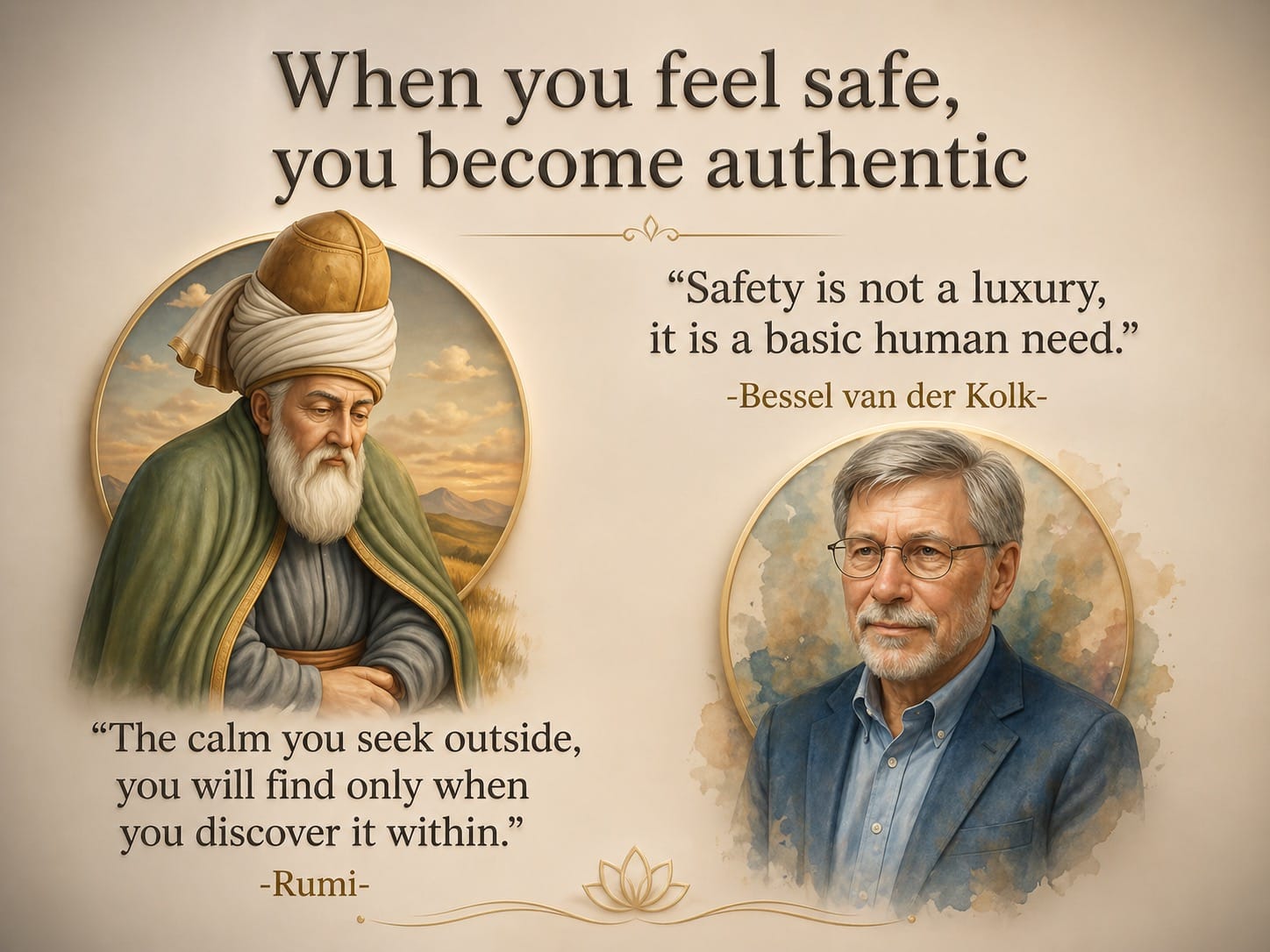
A child comes into the world with two fundamental needs: the need for safe connection and the need to survive. When these needs are met, the nervous system learns that the world is safe. The body relaxes, and authenticity, curiosity, and a natural movement toward life emerge. When safety is missing, the system organizes around survival. Attachment theory shows that the quality of early relationships fundamentally shapes how we later perceive ourselves, others, and the world. What we learned to feel in the presence of another becomes the foundation of our inner world.
Safety and the Nervous System
When we feel safe, the body functions differently than when we feel threatened. Breathing deepens naturally, muscles relax, and perception expands. The world appears softer, more detailed, and more alive. We become open to contact, touch, and closeness. When safety is absent, the body tightens, breath shortens, and the senses narrow. The nervous system shifts into survival mode. Polyvagal theory describes how this process happens automatically, without conscious choice. Safety expands perception, while threat narrows it. How we see, hear, and feel the world is directly influenced by the state of our nervous system.
The Body Remembers
The body is not just a passive container of experience, but a living memory. When we lose a sense of safety, change happens immediately. Breath shifts, muscles activate, and attention moves toward threat. These responses are expressions of survival intelligence. The problem arises when these responses become chronic and the body begins to function as if threat is constantly present. Then tension becomes the norm, and relaxation becomes unfamiliar.
From an evolutionary perspective, this system developed to keep us alive in environments where danger was real and often immediate. The human nervous system evolved to detect threat quickly and prioritize survival over comfort. When faced with danger, the body mobilizes energy for action. Heart rate increases, breathing becomes faster, muscles prepare to fight or flee. If escape is not possible, the system may shift into immobilization, conserving energy and reducing visibility.
These responses were designed to be temporary. After the threat passed, the body would return to balance through movement, rest, and social connection. The nervous system would reset, and the organism would continue functioning in a state of relative ease.
In the modern world, many of the threats we face are no longer physical but psychological and relational. The nervous system, however, does not distinguish clearly between a physical danger and an emotional one. A look, a tone of voice, a memory, or a thought can activate the same biological responses that were once reserved for life-threatening situations.
When these activations are repeated without resolution, the system begins to adapt. It learns to stay prepared. Over time, what was once a response becomes a baseline. The body no longer reacts to danger. It anticipates it.
This is why the body can feel tense even in safe environments. It is not reacting to the present moment, but to patterns shaped in the past. In this sense, the body remembers not as a story, but as a state.
Understanding this shifts the perspective from something being wrong to something making sense. The body is not working against us. It is continuing a function that once supported survival.
The invitation is not to override these responses, but to create new experiences that allow the nervous system to recognize safety again. Through breath, movement, and conscious awareness, the body can begin to update its expectations. Gradually, it learns that it does not need to stay in constant readiness.
This is how the past is not erased, but integrated. Not through thinking alone, but through lived experience.
The Gut as a Brain of Safety
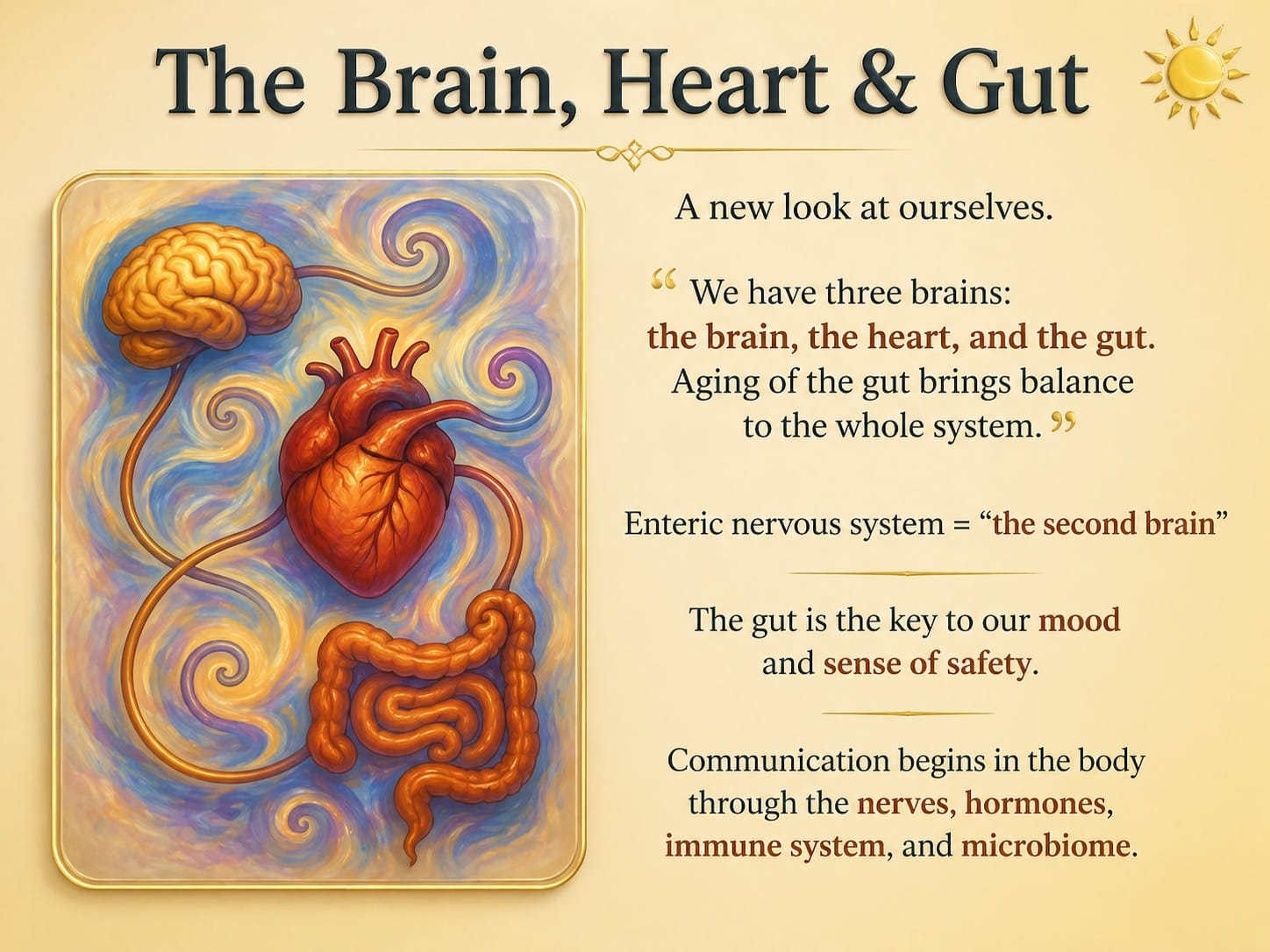
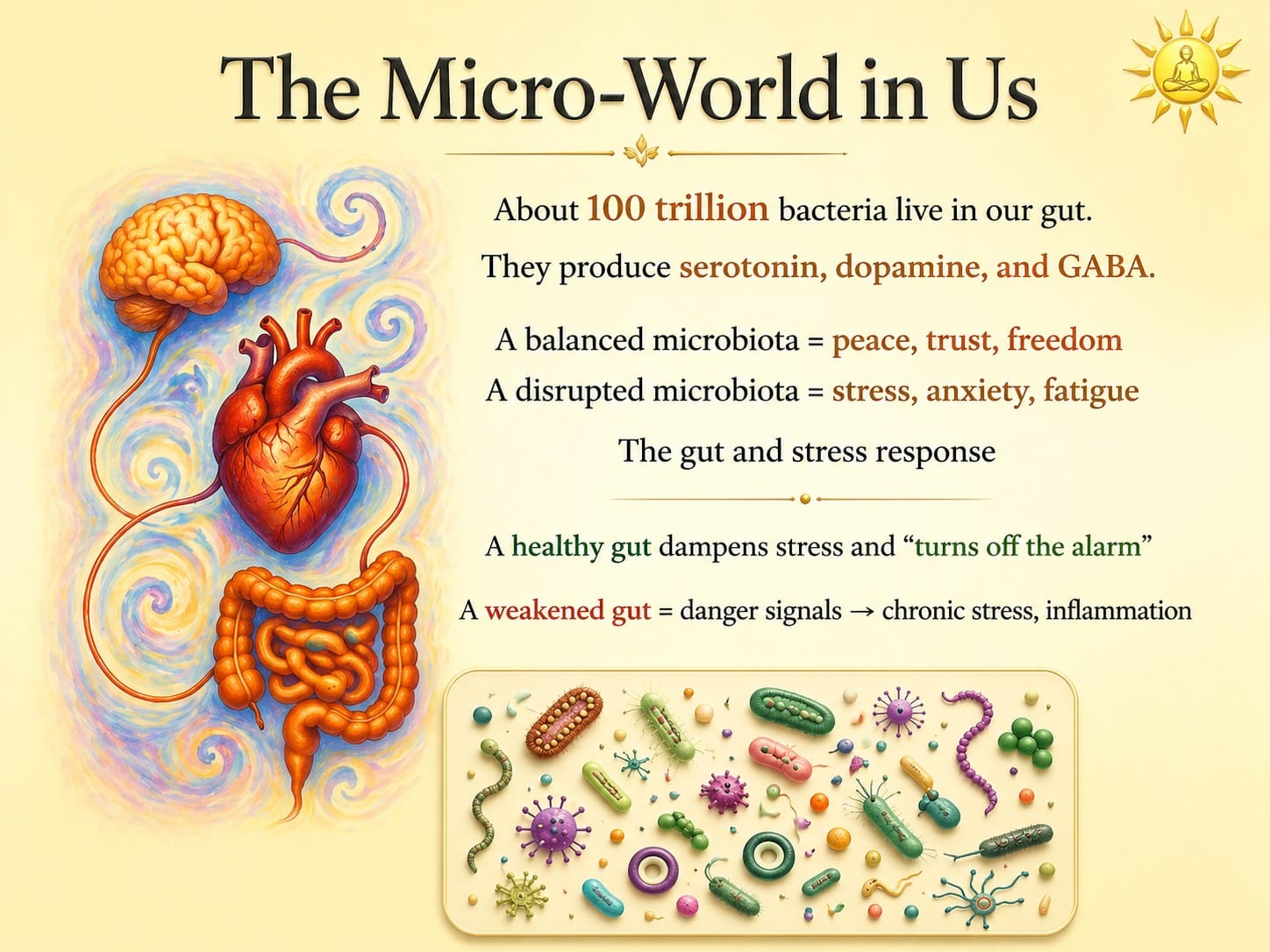
The connection between body and mind is not just philosophical, it is scientifically grounded. The enteric nervous system, often called the “second brain,” contains a vast network of neurons and communicates with the brain through neural, hormonal, and immune pathways. The gut hosts a large community of microorganisms that play a role in regulating mood, stress, and overall balance. Research on the gut–brain axis shows that the state of the gut can influence our ability to handle stress and regulate emotions. When the body is in balance, the nervous system returns more easily to a sense of safety.
The Gut as a Brain of Safety
Vulnerability as a Gateway to Connection
Vulnerability is often seen as weakness, but it is actually an expression of strength. It is the willingness to risk the pain of rejection for the possibility of real connection. It means being in contact with our emotions, needs, and boundaries, and allowing ourselves to express them—even when there is a risk of not being accepted. Vulnerability is the foundation of authenticity, trust, and meaningful relationships. Without it, connection becomes superficial and controlled.
Shame as a Silent Block
On the path to vulnerability, shame often appears. It is the inner voice that says we are not good enough or not worthy of love and acceptance. Shame disconnects us from ourselves and from others. Paradoxically, the moment we feel least worthy of connection is when we need it most. On the other side of shame lies the longing for acceptance, belonging, and love. The first place where this process can begin is within ourselves.
Early Dependencies and Adaptations
Control, proving, helping, perfectionism, or becoming invisible are adaptive strategies that once helped us survive difficult environments. Today, they can create tension and prevent us from feeling inner safety. Substances and behaviors such as food, alcohol, or digital stimulation often come later as attempts to regulate inner discomfort. The first “addiction” is the survival pattern itself.
Dopamine and the Loss of Joy
Dopamine is a neurotransmitter linked to motivation, movement, and curiosity. It is not only a reward chemical, but the energy that moves us toward life. Under long-term stress or trauma, these circuits change. The brain learns to conserve energy, and what once brought joy stops working. Apathy, loss of motivation, and inner emptiness can arise. This state is an adaptation to chronic overload.
The Pain Body and the Return of the Past
Past wounds remain with us even when we consciously forget them. They are stored in the body and can be reactivated in similar situations. Sometimes it feels as if the pain has a life of its own. This is often referred to as the “pain body,” and it needs to be seen and understood. When we allow it to exist without immediate reaction, it gradually begins to release.
The Path to Integration
It is the ability to feel and notice what is happening within us in the present moment. Through a regular practice of sensing the body, we begin to notice subtle signals before they overwhelm us. A simple pause and directing attention into the body—such as into the feet—can be the beginning of returning to ourselves. Naming what we feel helps regulate the nervous system and creates a bridge between emotion and awareness.
New Neural Pathways and Neuroplasticity
The brain has the capacity to change throughout life. Conscious presence, awareness, breath, movement, play, creativity, and safe relationships create new neural connections. These experiences gradually calm the brain’s stress centers and strengthen the ability to respond rather than react. Integration is the creation of new experience, again and again, in the present moment.
Responsibility for the Present
We are responsible for our reactions, our boundaries, and how we care for ourselves. Without blaming ourselves or others, we reconnect with our inner strength. When we stop waiting for someone else to fix our past, space opens for conscious creation of our life.
Wound as a Catalyst
What wounds us also shapes us. In many cases, qualities such as sensitivity, empathy, inner strength, or creativity develop through our wounds. In this way, the wound becomes a catalyst for growth if we are willing to look at it consciously. The question is not why it happened, but what has developed within us because of it and how we can use it today.
Returning to Ourselves
The ability to remain present without automatic reaction develops through practice. By repeatedly returning to the body, the breath, and the present moment, we gradually learn to live more consciously. We open to being real, and within that space, intuition, direction, and a deeper sense of meaning begin to emerge.
If the way we experience reality is shaped by the state of the nervous system, then the breath becomes a simple and direct way to work with it.
Not by changing the world, but by changing how the body relates to it.
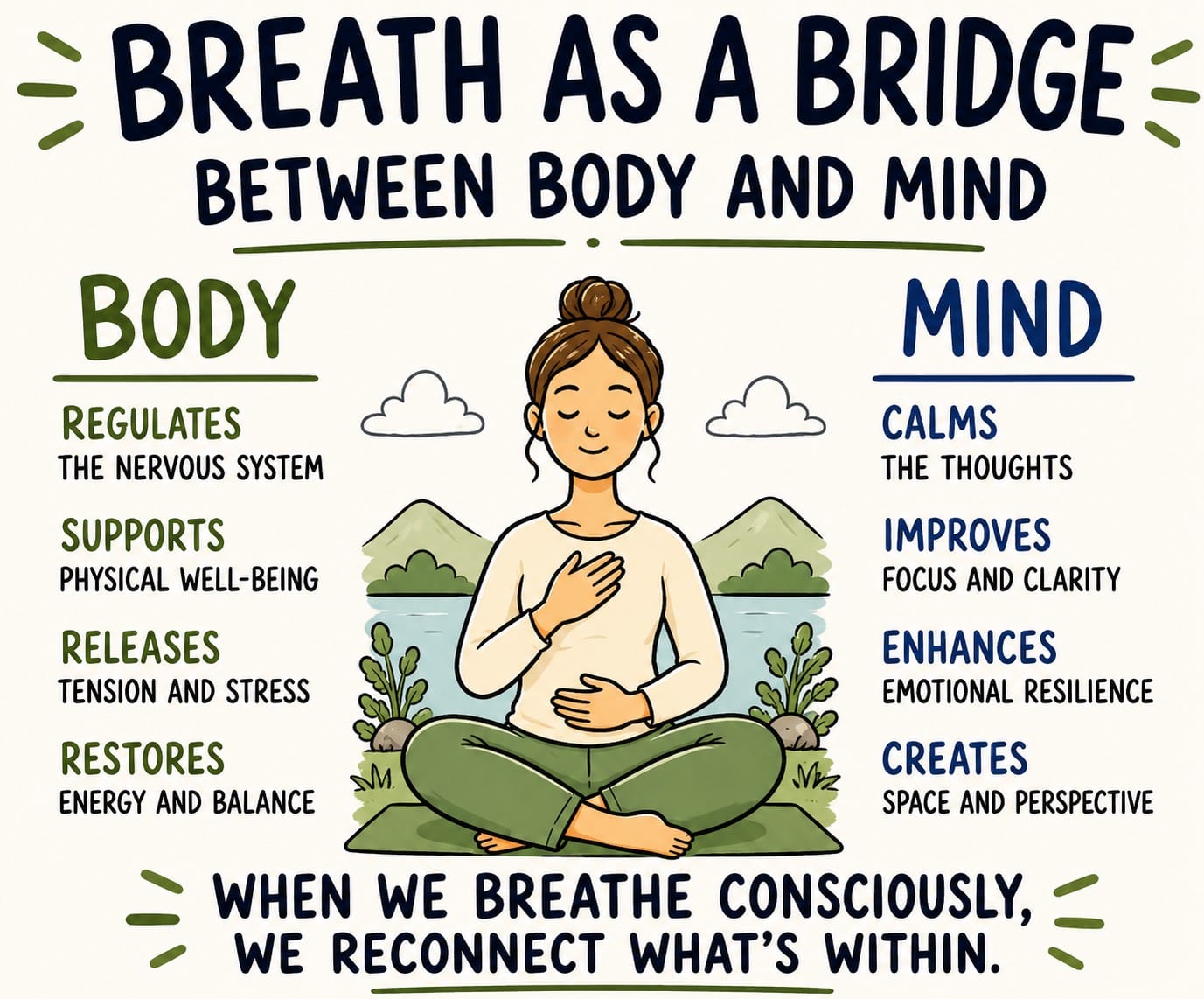
Breath as a Bridge Between Body and Mind
One of the first and most noticeable changes when we lose a sense of safety is the breath. It becomes faster, shallower, and often moves higher into the chest. It is part of an automatic response that prepares the body for action. From an evolutionary perspective, this shift supports survival by increasing oxygen availability and mobilizing energy for fight or flight. At the same time, attention narrows and the body becomes more alert.
5 to 6 breaths per minute
When the nervous system experiences safety, the breath naturally slows down and deepens. Research on respiratory physiology and heart rate variability shows that a slower, more coherent breathing rhythm, around five to six breaths per minute, is associated with increased parasympathetic activity, greater emotional regulation, and a stronger sense of connection within the body. This is not something we need to force. It is a pattern the body returns to when it feels safe enough.
This creates a simple but powerful doorway for exploration. Instead of trying to control the mind, we can begin by noticing the breath. Without changing anything, just observe. Is the breath fast or slow. Shallow or deep. Does it feel held or flowing. As attention rests on the breath, the system often begins to settle on its own. In this way, the breath becomes both a reflection of our internal state and a bridge back to connection.
Over time, this awareness allows the nervous system to experience something new. It begins to recognize that it is possible to slow down, to feel, and to remain in contact. Not because the world has changed, but because the body is learning a different rhythm.
Breath is one of the simplest and at the same time most profound tools we have. It is always present, yet often unnoticed. Through the breath, we can begin to regulate the nervous system, shift inner tension, and gradually move from survival into conscious awareness.
Long Deep Breathing
One of the foundational techniques is Long Deep Breathing. It is a first step in helping the body reconnect with the natural capacity of the lungs. The breath unfolds in three layers. It begins in the abdomen, continues with the expansion of the chest, and finally rises gently into the upper ribs and clavicle area. The exhale follows the reverse path. The upper chest softens first, then the middle, and finally the abdomen gently draws inward toward the spine.
As the breath slows down to approximately three to five breaths per minute, the nervous system begins to respond. The body softens, the mind becomes quieter, and space for awareness opens. What was automatic starts to become conscious.
Left Nostril Breathing
Another powerful technique is Left Nostril Breathing. This form of breath supports the right hemisphere of the brain, which is associated with intuition, creativity, and a sense of wholeness. At the same time, it activates the parasympathetic nervous system, which supports rest, recovery, and healing. In practice, this allows the body to relax more deeply, the breath to settle, and internal pressure to decrease.
During this practice, the right nostril is gently closed with the thumb, and the breath flows through the left nostril only. The inhale and exhale are smooth, and a natural pause may arise between them. Over time, this creates a steady rhythm that has a stabilizing effect on the entire system.
Breath directly influences the state of the nervous system. Breathing through the right nostril tends to activate the system, while the left nostril supports relaxation. A longer inhale increases activation, while a longer exhale brings calm. Holding the breath after an inhale stimulates, while holding after an exhale soothes. These simple principles allow us to consciously work with our internal state without the need for complex analysis.
Basic breath series
A basic breath series brings these principles together into a coherent practice. It begins with left nostril breathing, then transitions to right nostril breathing. This is followed by alternating nostril breathing, which helps balance the activity of both hemispheres. A more dynamic phase comes with Breath of Fire, which supports energy, cleansing, and activation. After this, the body naturally moves into stillness, often supported by meditation, such as chanting Sat Nam.
The whole sequence creates a rhythm between activation and relaxation. The body learns to move between these states consciously, without getting stuck in either one. With regular practice, the breath becomes a tool for guiding attention, releasing tension, and understanding internal responses more clearly.
Through breath awareness, subtle patterns begin to reveal themselves. We start to notice how we react, where tension arises, and how the body responds to different situations. Gradually, there is more capacity to remain present even in moments that would previously feel overwhelming.
And this is where change begins. Not by forcing or controlling, but by learning to stay in contact with what is happening inside.
Kundalini Yoga Practice
- Left Nostril Breathing (Chandra Nadi Pranayama)
- Spinal Series (basic spinal sequence)
- Sat Kriya
- Deep Relaxation (Yoga Nidra / Gong / silence)
- Meditation: Sa Ta Na Ma
How to Practice the Techniques
Long Deep Breathing
Sit comfortably with a straight spine. You can sit on the floor or on a chair, as long as your chest is open and your shoulders are relaxed.
Place one hand on your belly and one on your chest to feel the movement of the breath.
Begin by inhaling slowly through the nose. Let the breath start in the abdomen. The belly gently expands outward. Then continue the inhale into the chest, allowing the ribs to widen. Finally, let the breath rise slightly into the upper chest.
Exhale slowly through the nose. First, allow the upper chest to soften, then the ribs move inward, and finally the belly gently draws back toward the spine.
There is no force. The movement is smooth and continuous.
Gradually slow the breath down. If possible, move toward three to five breaths per minute. Stay relaxed and aware of the sensations in the body.
Practice for a few minutes and notice how the body responds.
Basic Breath Series
This series brings together different breathing patterns to balance the nervous system, increase clarity, and create a natural rhythm between activation and relaxation. Sit comfortably with a straight spine and relaxed shoulders.
1. Left Nostril Breathing
Sit in an easy pose with a straight spine.
Rest the left hand in Gyan Mudra on the left knee.
Use the right thumb to gently close the right nostril.
Begin long, deep breathing through the left nostril.
Continue for 3 minutes.
At the end, inhale deeply and hold the breath for 10 to 30 seconds, staying relaxed.
2. Right Nostril Breathing
Place the right hand in Gyan Mudra on the right knee.
Use the left hand to gently close the left nostril.
Breathe long and deep through the right nostril for 3 minutes.
Inhale deeply at the end and hold the breath for 10 to 30 seconds.
3. Alternate Nostril Cycle
Sit with the spine straight and eyes closed.
Bring your focus to the brow point.
Inhale through the left nostril, switch, and exhale through the right.
Continue in a steady rhythm for 3 minutes.
At the end, inhale deeply and hold the breath.
4. Reverse Alternate Cycle
Inhale through the right nostril and exhale through the left.
Continue the same pattern with a smooth and steady rhythm.
5. Breath of Fire
Sit in an easy pose with both hands in Gyan Mudra.
Keep the spine straight and focus at the brow point.
Begin Breath of Fire, a rhythmic and active breath through the nose.
Continue for 7.5 minutes.
Inhale deeply, hold the breath for 10 to 60 seconds, then relax.
Allow 3 minutes of stillness, simply observing the natural breath.
6. Meditation (Sat Nam)
Inhale deeply.
Chant Sat Nam on the exhale.
Continue for 3 to 15 minutes, allowing the sound to guide your attention inward.
Summary of the Set
3 minutes left nostril breathing
3 minutes right nostril breathing
3 minutes inhale left, exhale right
3 minutes inhale right, exhale left
7.5 minutes Breath of Fire
3 minutes stillness
3 to 15 minutes chanting
Let the breath gradually slow down toward 3 to 5 breaths per minute.
Move at a pace that allows the body to stay relaxed and aware. With repetition, the breath becomes more natural, and the practice begins to guide itself.
Basic Spinal Energy Series
The spine is not only a structural support of the body. It is a central pathway through which energy, movement, and information flow. The way the spine moves directly influences how we feel, think, and perceive.
This series works gradually from the base of the spine toward the top. Through rhythmic movement, breath, and attention, the body begins to reorganize itself. Tension softens, circulation improves, and the nervous system becomes more responsive and balanced.
1. Spinal Flex (Easy Pose)
We begin in a simple seated position. Holding the ankles, the movement of the spine follows the breath. As the inhale comes in, the chest opens and the spine gently moves forward. On the exhale, the spine rounds back. The head remains steady, allowing the movement to stay centered in the spine. The repetition creates a rhythm that gradually settles both the body and the mind.
2. Spinal Flex (on Heels)
The same movement continues while sitting on the heels. The hands rest on the thighs, and the spine moves forward and back with the breath. Internally, the sound “Sat” can accompany the inhale and “Nam” the exhale. This begins to connect movement, breath, and awareness into one unified experience.
3. Spinal Twist
From here, the movement shifts into a gentle spinal twist. Holding the shoulders, the torso rotates from side to side. The breath remains long and deep. This movement brings mobility into the middle of the spine and helps release accumulated tension in the upper body.
4. Bear Grip (Heart Center)
At the heart center, the hands interlock in Bear Grip. The elbows move in a rhythmic, alternating motion, creating subtle activation around the chest and shoulders. This area is closely connected with both breath and emotional experience, and the movement can begin to open space there.
5. Spinal Flex (Cross-Legged)
The spinal flex returns again in a cross-legged position, this time with the hands resting on the knees and the arms extended. The same forward and backward movement continues, deepening the connection between breath and spinal awareness.
6. Shoulder Shrugs
Gradually, the focus moves upward. The shoulders lift on the inhale and release on the exhale.
7. Neck Rolls
The neck follows with slow, mindful circles, releasing tension that often accumulates through stress and mental activity.
8. Bear Grip (Throat Level)
At the throat level, Bear Grip is applied again. With each inhale and exhale, a gentle internal engagement of the pelvic floor can be added. This connects the base of the body with the upper centers, creating a sense of integration.
9. Sat Kriya
The series then moves into Sat Kriya. Sitting on the heels with the arms extended overhead, the sound “Sat Nam” is chanted in a steady rhythm. The navel draws in on “Sat” and releases on “Nam.” This creates a strong internal movement that works through the entire system, from the base of the spine upward.
10. Deep Relaxation
After the active phase, the body lies down in complete relaxation. This is where the effects of the practice begin to integrate. The nervous system processes the stimulation, and the body reorganizes itself in a more balanced way.
Essence of the Practice
The flexibility of the spine is often associated with vitality. When the spine moves freely, energy and circulation can flow more easily, and the body tends to feel more alive.
This series systematically stimulates all areas of the spine, bringing awareness and movement to each segment. Many people notice greater mental clarity and a sense of lightness after regular practice. One of the contributing factors may be improved circulation of spinal fluid, which supports both the nervous system and cognitive function.
At the same time, this practice prepares the body for meditation. By releasing physical tension and balancing the system, it becomes easier to sit, breathe, and remain present.
For beginners, the number of repetitions can be reduced, and the rest periods can be extended. The intention is not to push the body, but to create a rhythm that allows it to open gradually.
This series gradually awakens the spine, balances the system, and prepares the body for stillness.
Age is measured by the flexibility of the spine.
The flexibility of the spine is often seen as a reflection of vitality. When the spine remains mobile and responsive, the body tends to feel more alive, more adaptable, and more connected.
This series works gradually from the base of the spine toward the top, bringing movement and awareness to each segment. All 26 vertebrae are stimulated, and the body begins to feel more open and integrated. In yogic language, this is often described as a movement of energy through the chakras.
It is an excellent practice before meditation. By preparing the body in this way, it becomes easier to sit, breathe, and remain present. Many people notice increased mental clarity with regular practice.
One of the contributing factors may be the improved circulation of spinal fluid, which supports the nervous system and is linked to functions such as memory and focus.
For those who are just beginning, the number of repetitions can be reduced. Instead of 108, the movements can be practiced 26 times, and the rest periods can be slightly longer. The intention is not to push the body, but to allow it to open gradually and safely.
Here are the themes of the sessions:
- Body and Safety
- Emotions as Messages
- Anger and Power
- Fear and Control
- Shame and Self-Judgment
- The Inner Critic
- Relationships and Attachment
- The Parts That Survive
- The Desire for Change and a New Identity
The intention behind this structure is to guide participants gradually from creating safety in the body, through understanding emotional and adaptive patterns, toward integration and authentic change.